NAD+ Face Cream
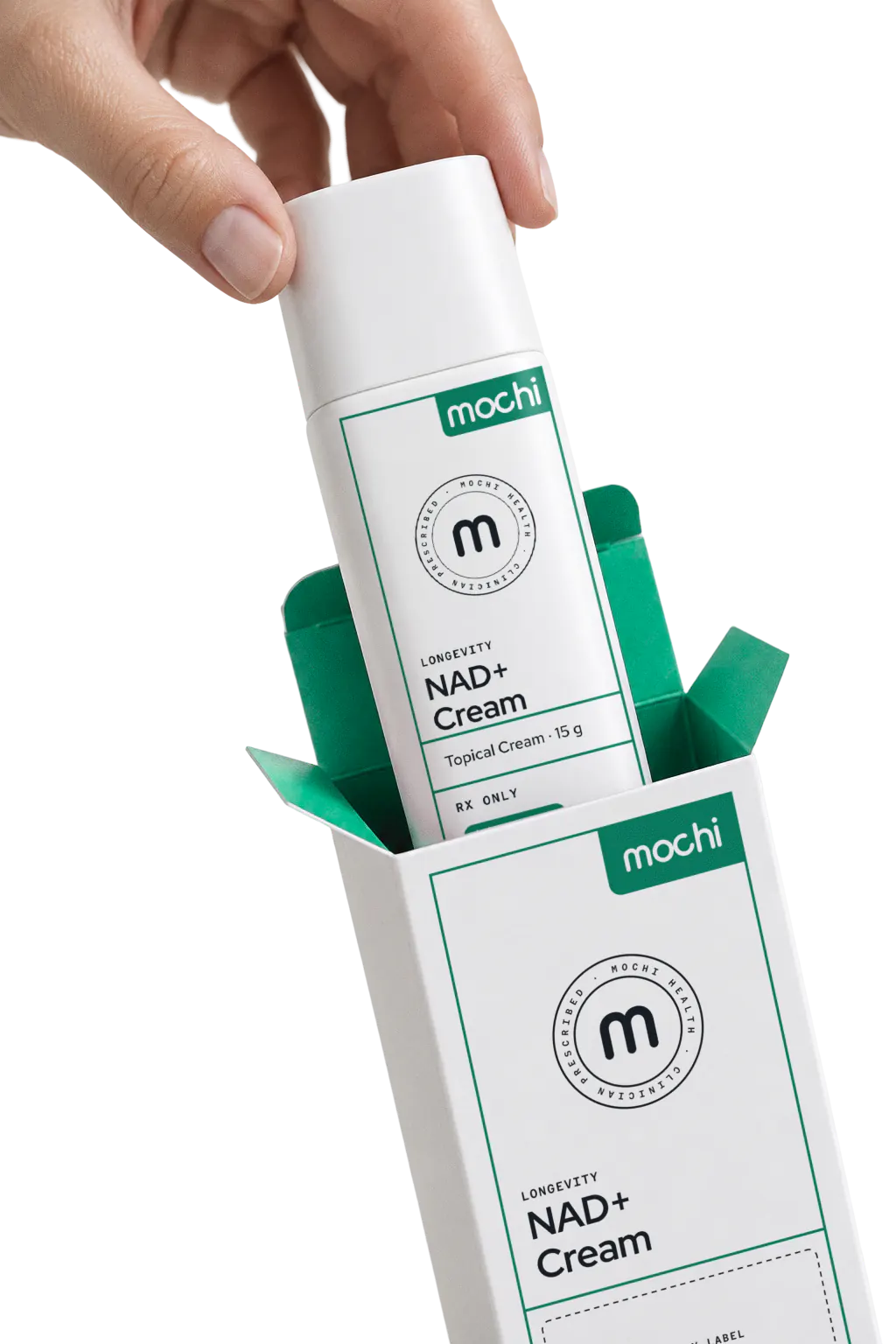
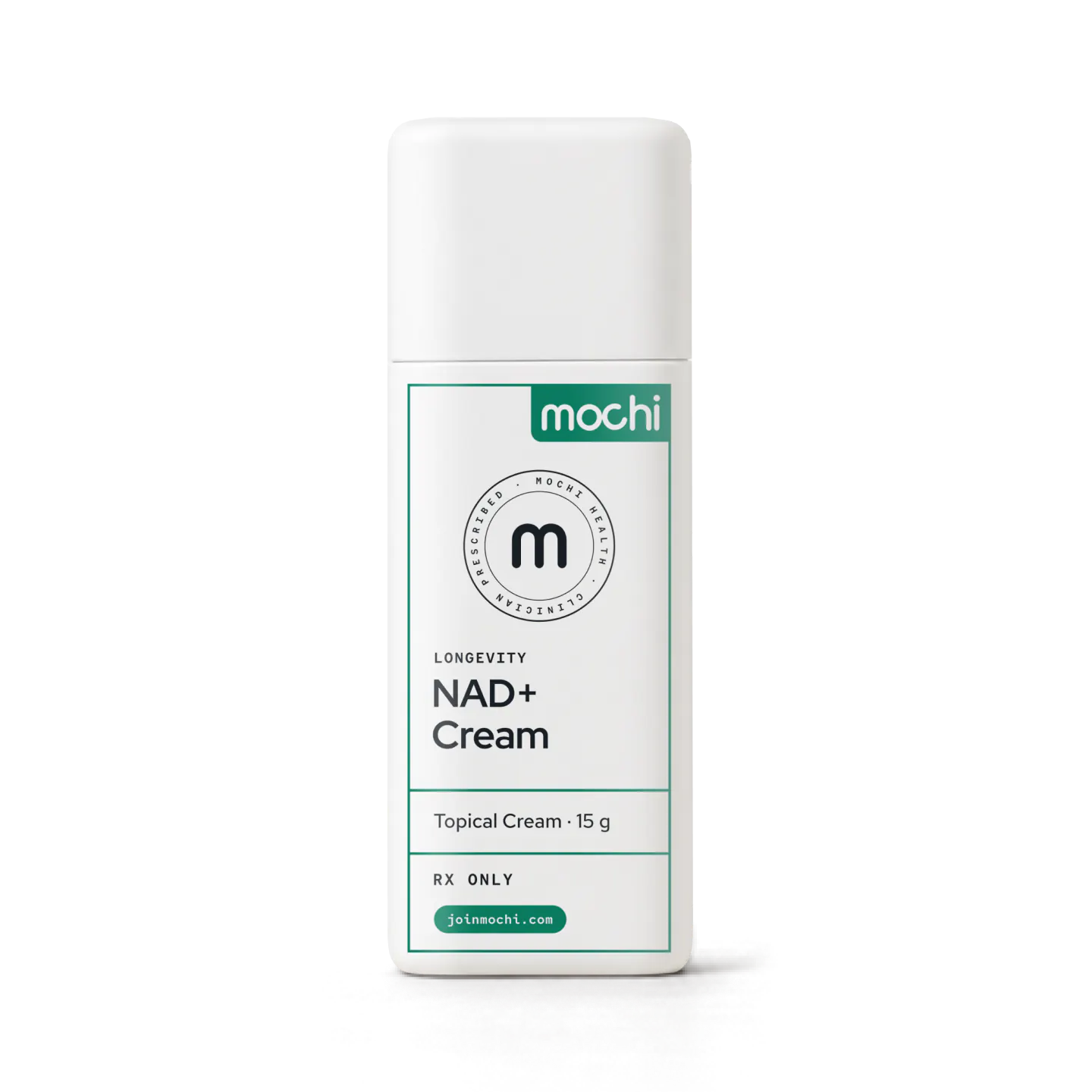
A cream you smooth onto your skin as part of your daily routine.
- Price
$52 / month
- Strength
10% (15 g)
- Best for
Brighter, smoother skin
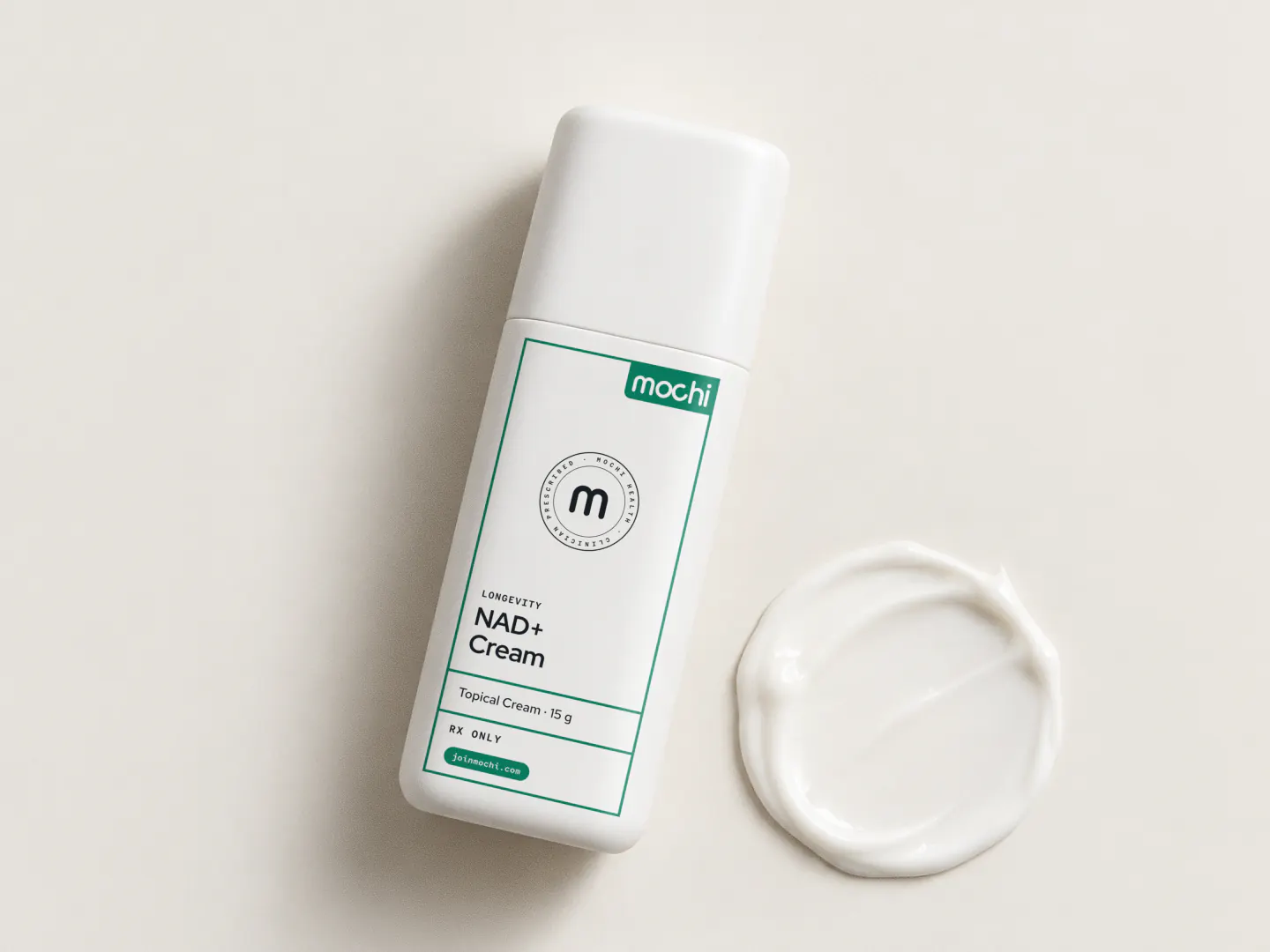
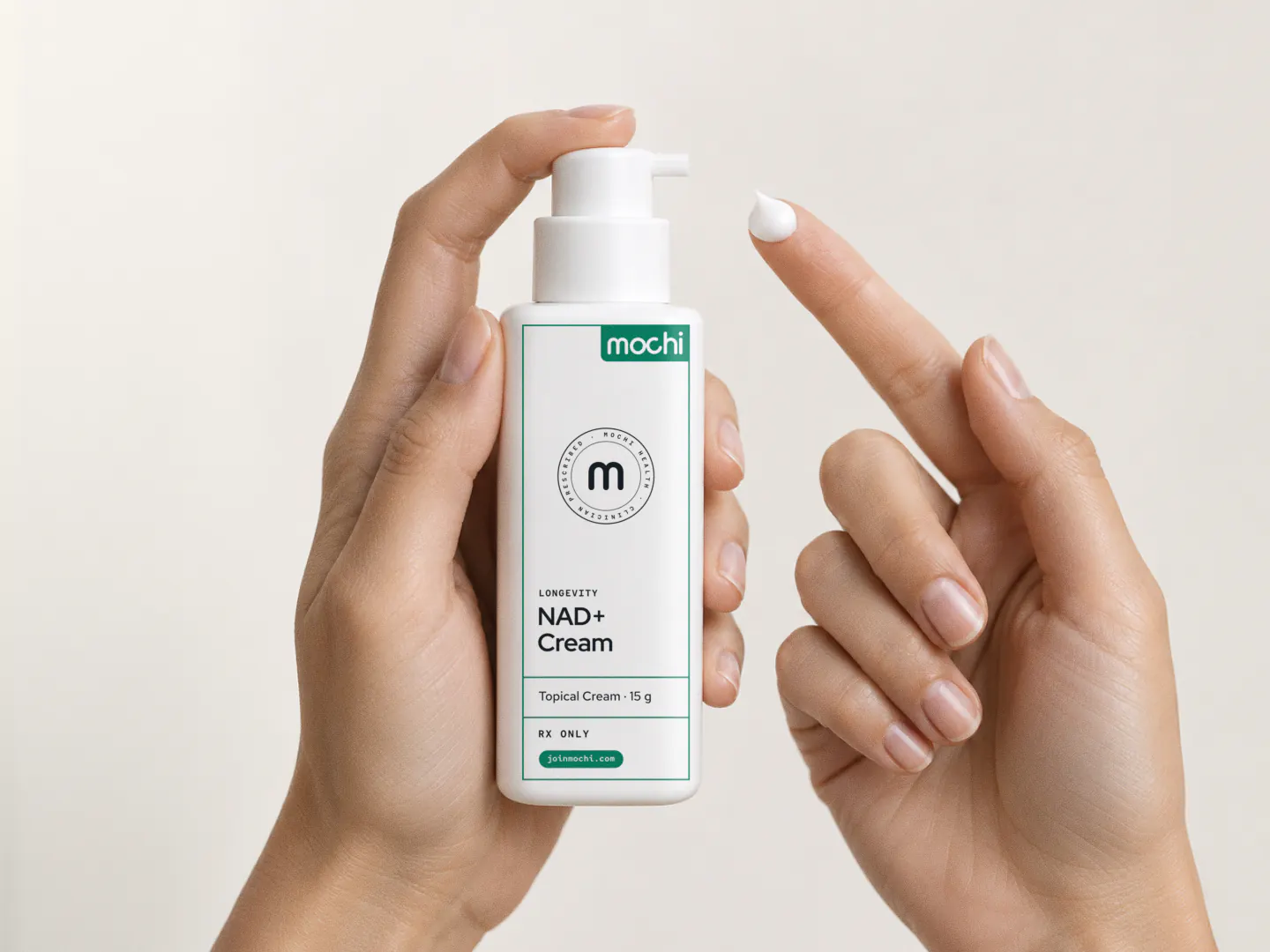
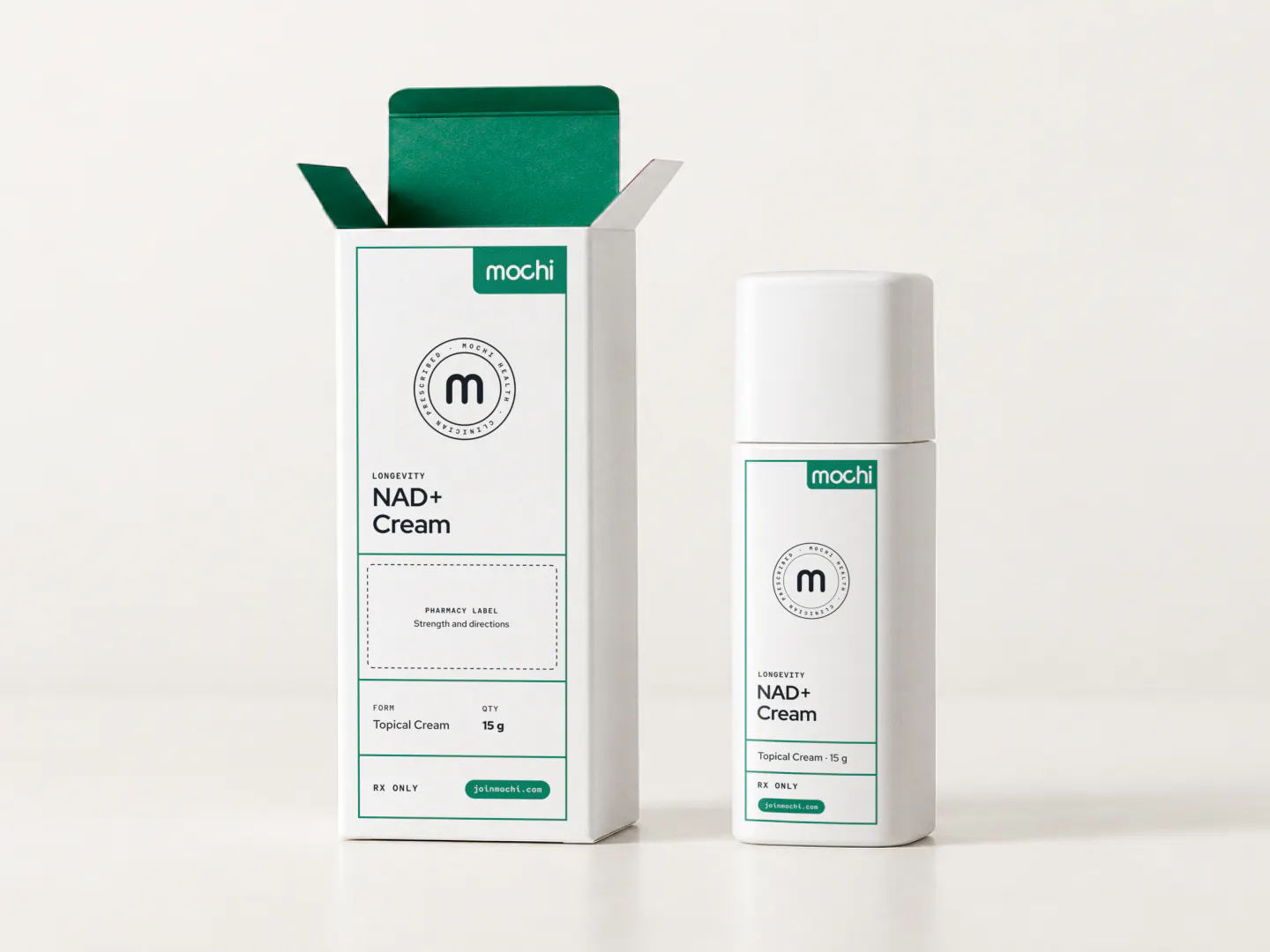
Product appearance may differ from image.
NAD+ is the coenzyme that powers your cells’ energy and helps repair DNA. Our NAD+ cream is made for anyone who wants brighter, smoother-looking skin, in one simple step for your skincare routine.
$52/ month
NAD+ is a coenzyme found in every cell, where it helps turn the food you eat into ATP, your cells’ energy. It also powers sirtuins and PARPs, enzymes that regulate genes and repair damaged DNA.¹ Each application puts NAD+ right on your skin, where NAD+ levels naturally fall with age.²
NAD+ / Nicotinamide Adenine Dinucleotide (10%)
NAD+ is a compounded product. FDA does not approve nor verify the safety, effectiveness, or quality of compounded drugs. Read important safety information here.
A licensed provider reviews your online visit before anything is prescribed. Async provider review fee waived on your first Mochi order. Otherwise, $9.99 per async provider review.
Did you know?
NAD+ (nicotinamide adenine dinucleotide) is a coenzyme found in every cell. Your cells need it to turn food into energy and to repair damaged DNA.
Helps mitochondria turn food into ATP, the fuel your cells run on.
Skin NAD+ levels drop as you age, in both men and women.²
Powers PARPs, the enzymes that fix damaged DNA.
Where the cream goes, and what NAD+ does in your skin.
Each application puts NAD+ right on your skin, where NAD+ levels naturally fall with age.
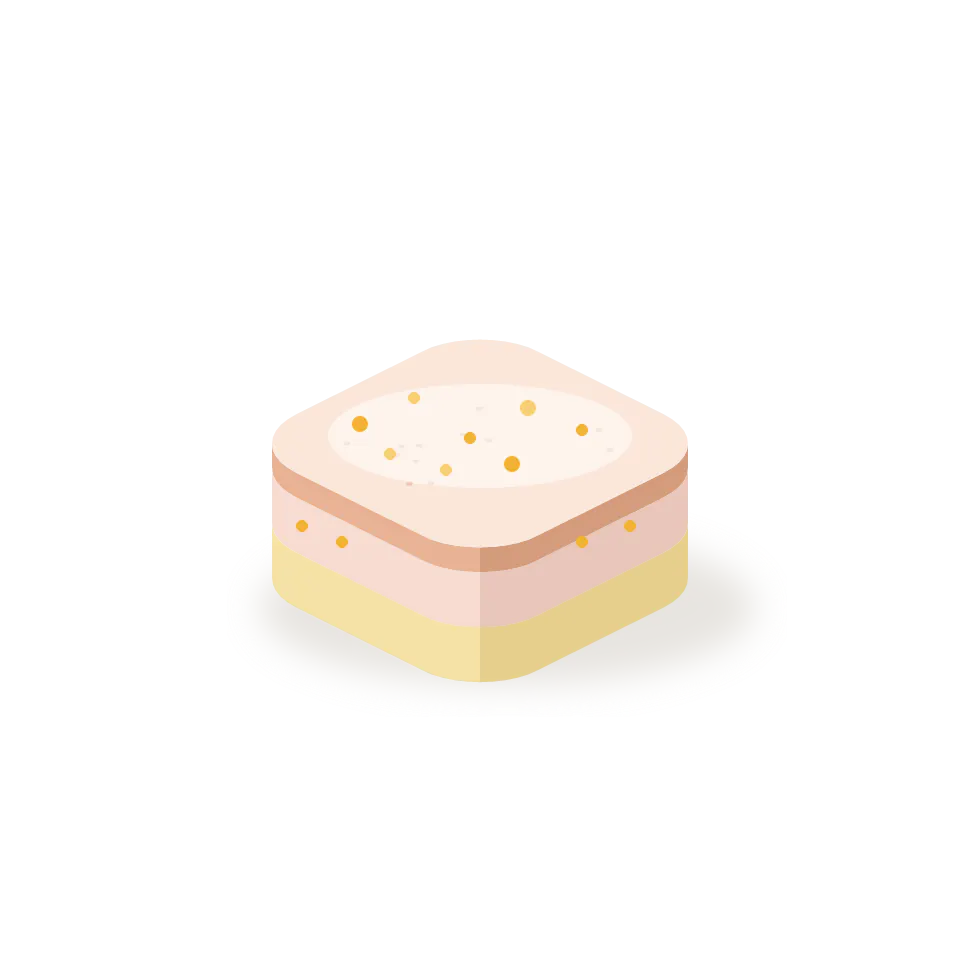
NAD+ is a large molecule, so most of it likely stays in the outer layers of your skin, right where you put it.
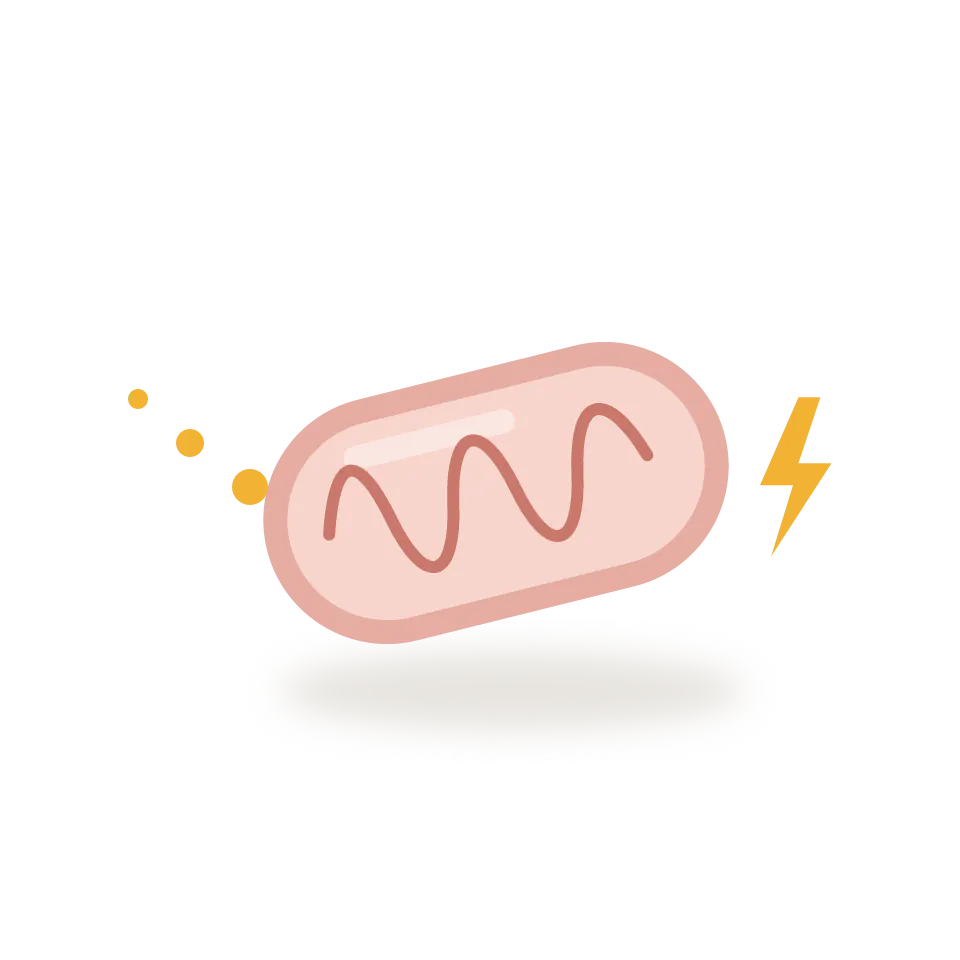
Like every cell, skin cells use NAD+ to turn nutrients into ATP, the energy they run on.
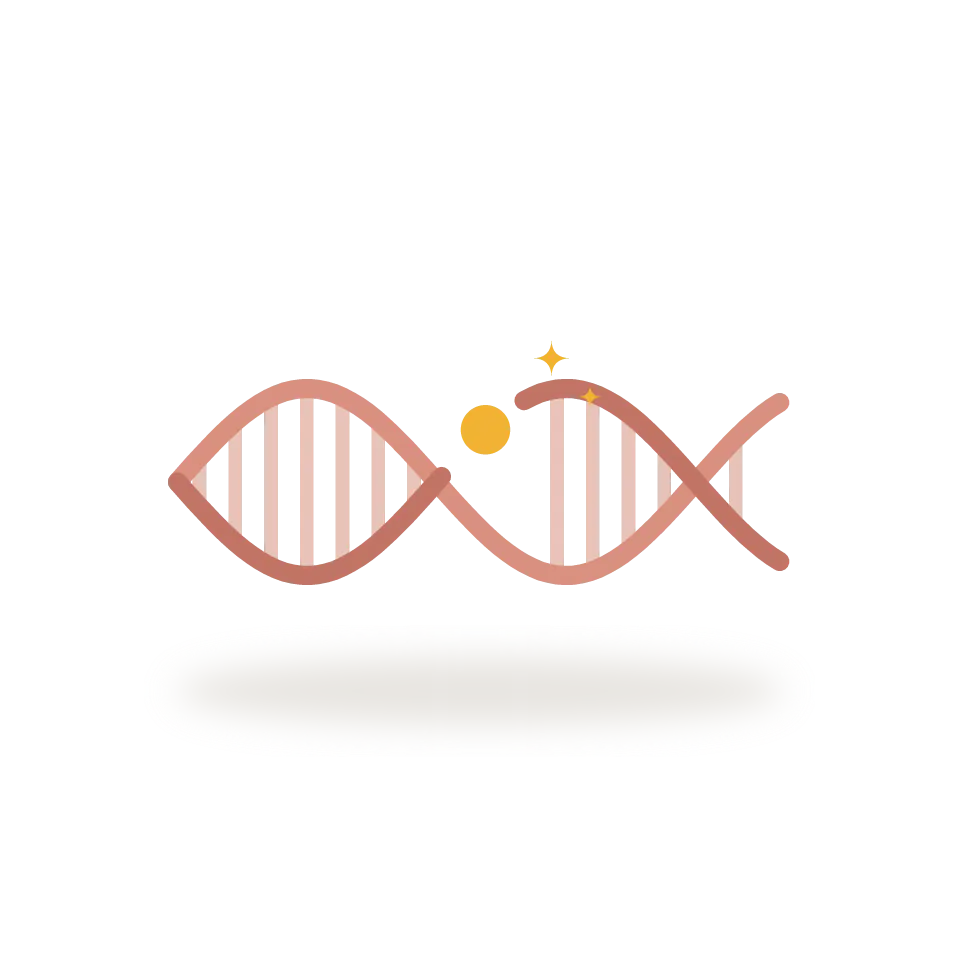
Skin cells also use NAD+ to repair damaged DNA that has built up over the years.
Smooth a pea-sized drop onto your face.
Each form gets NAD+ into your body a different way. Here’s how they compare.
A cream you smooth onto your skin as part of your daily routine.
$52 / month
10% (15 g)
Brighter, smoother skin

A licensed provider reviews your intake and ships your prescription to your door.
Complete a quick online intake covering your health history, current medications, and health goals.
A licensed provider typically reviews your intake within 24 hours and, if appropriate, prescribes your treatment.
Your medication ships straight to your doorstep. Message your provider whenever you have questions.
$52/ month
+ async provider reviewRegularly $9.99$0 first order
Your membership includes:
Cancel anytime. Charged only if prescribed.
After nearly 20 years in practice, I think about healthy aging over decades rather than months.
More than 4,000 patients have started longevity and peptide treatments through Mochi, and our providers make sure each one fits the patient’s overall health and current medications.

Dr. Saima Ahmad, MD, FACP
Medical Director, Mochi Medical
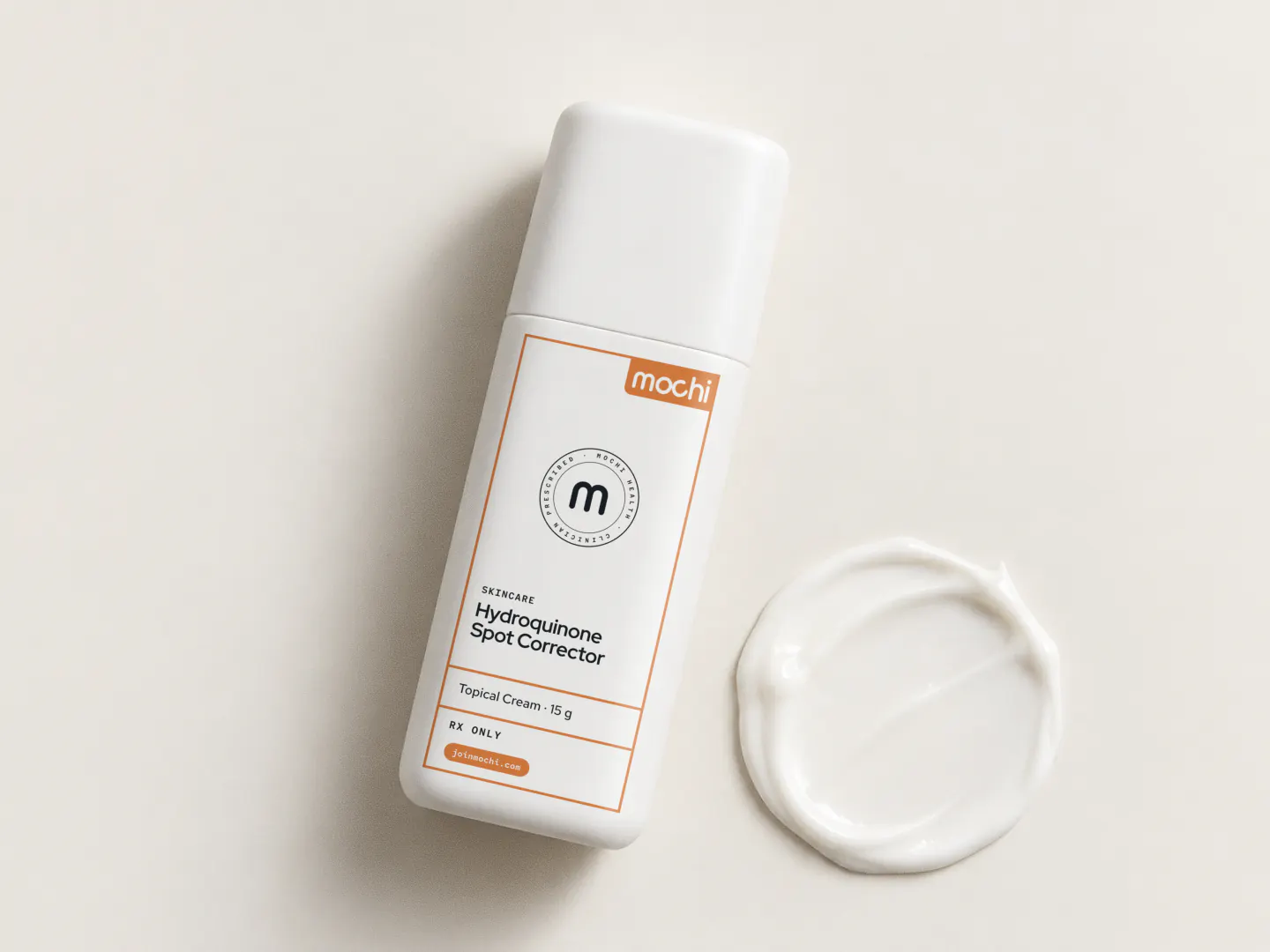 Rx
$40 / month
Prescription hydroquinone made to fade dark spots and melasma.
 Rx
$119 / 2 months
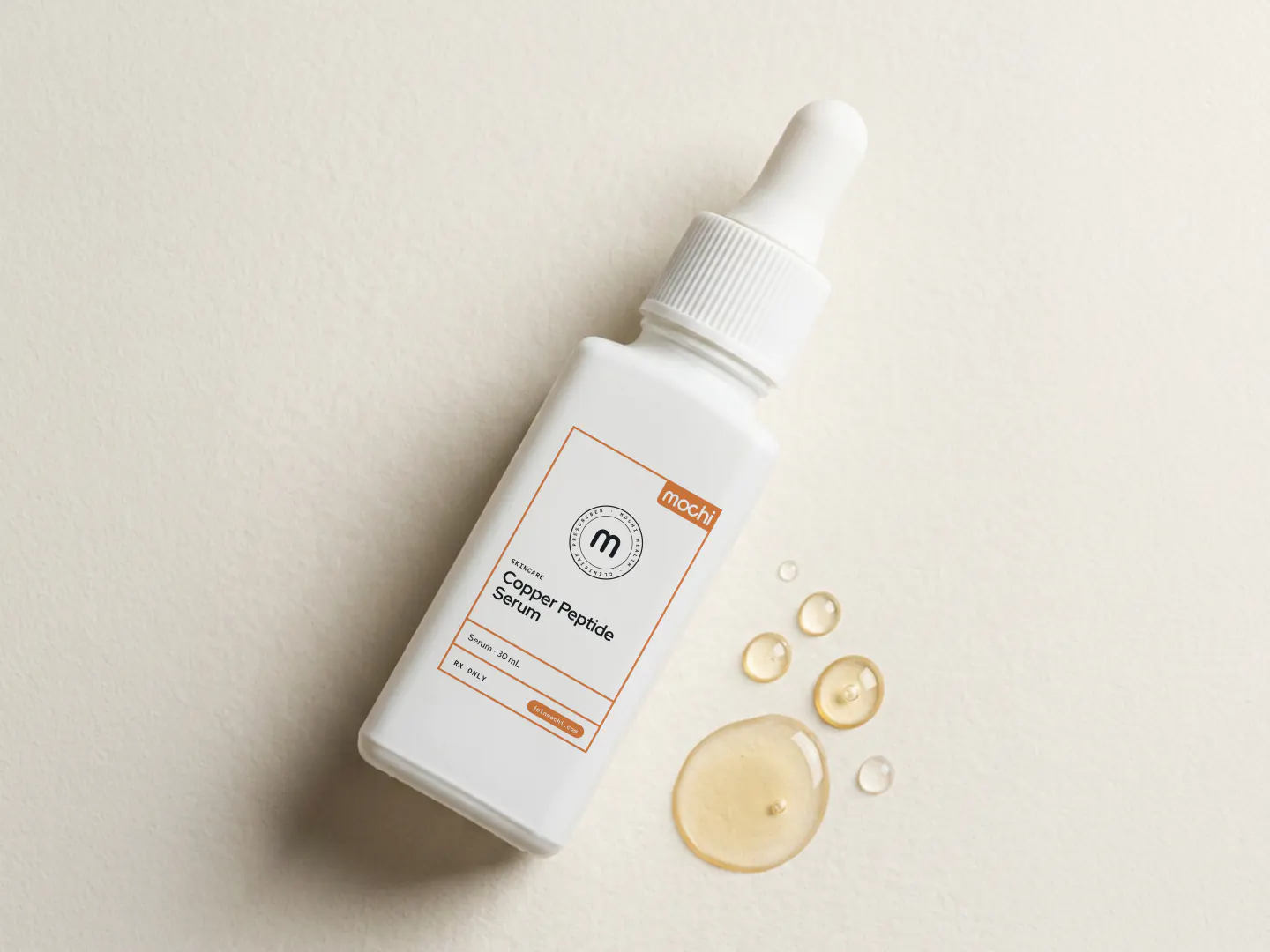
A GHK-Cu serum for firmer-looking skin and a more even tone.
 Rx
$55 / 2 months
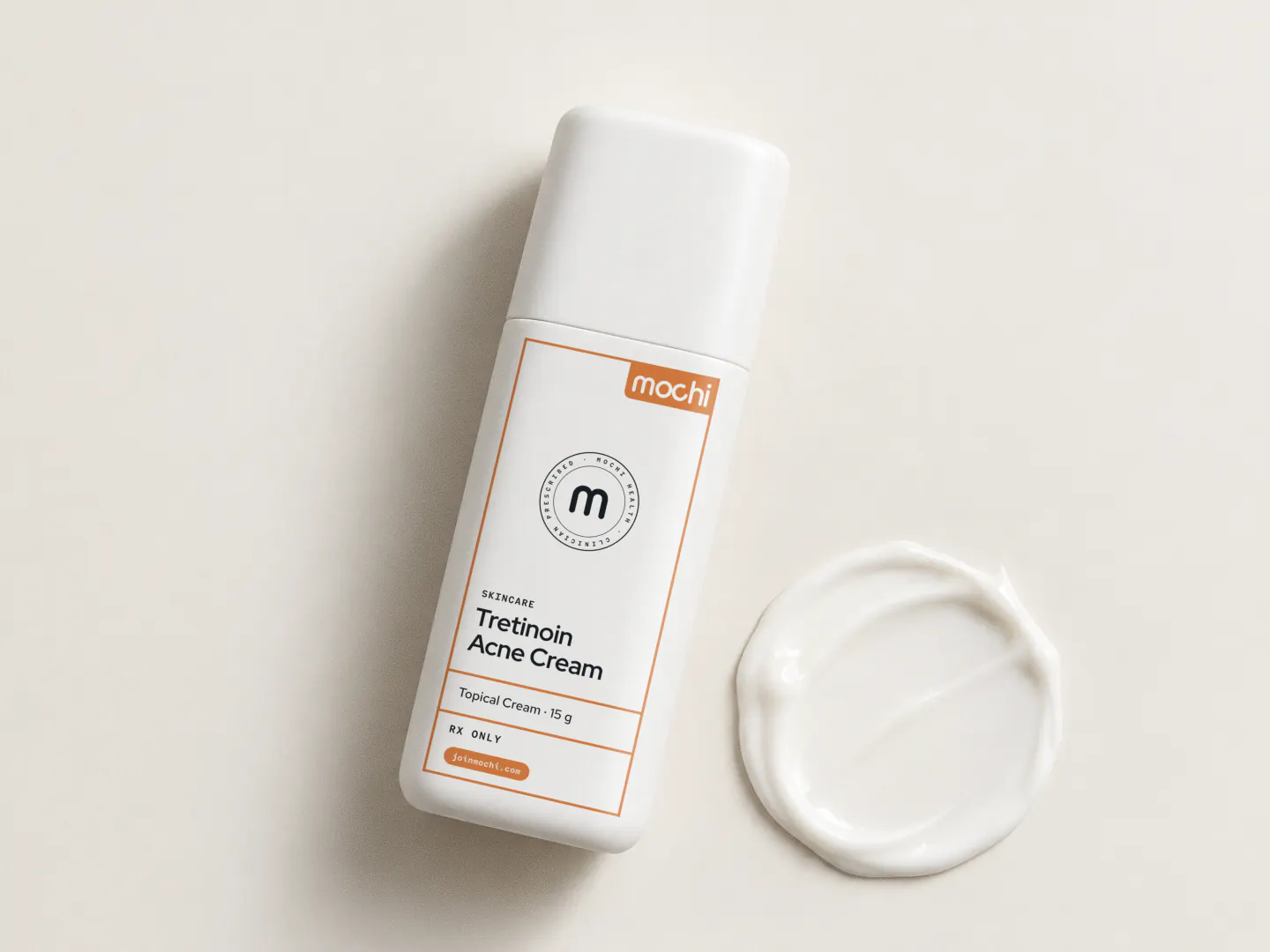
A nightly cream that clears pores, fades marks and calms redness.
Answers to the most common questions about NAD+ Cream.
Your provider sets how often you apply it, based on your health history and goals. On average, most people apply a pea-sized drop once a day, at night, as part of their skincare routine.
It should feel like a light cream on your skin. Stop using it and message your provider if you get redness, itching, burning or a rash.
Everyone’s skin is different, and no study has tracked results from NAD+ cream yet. Once you’re prescribed, you can message your provider anytime to share how your skin is doing, and they can adjust your plan.
No study has compared them head to head, so the best form is the one that fits your goals. Cream goes straight onto your skin, so it’s centered on skin health. Shots, sprays and troches are used for whole-body energy goals. Your provider can help you choose.
Do not take NAD+ if you’re pregnant, trying to get pregnant or breastfeeding, since NAD+ hasn’t been studied in those groups. Also share any history of cancer and every medication you take. Your provider reviews your full health history before prescribing.
NAD+ creams are made by state-licensed compounding pharmacies, and compounded drugs aren’t FDA-approved. A licensed provider reviews your health history online and decides whether NAD+ is right for you.
Each 15 g container holds 1,500 mg of NAD+. How long it lasts depends on how much and how often you apply it. At Mochi’s standard dose, one container covers about 4 weeks.


























Covarrubias, Anthony J., et al. “NAD+ Metabolism and Its Roles in Cellular Processes during Ageing.” Nature Reviews Molecular Cell Biology (opens in a new tab), vol. 22, no. 2, 2021, pp. 119–41. doi:10.1038/s41580-020-00313-x.
Massudi, Hassina, et al. “Age-Associated Changes in Oxidative Stress and NAD+ Metabolism in Human Tissue.” PLOS ONE (opens in a new tab), vol. 7, no. 7, 2012, p. e42357. doi:10.1371/journal.pone.0042357.